
5 Brain Health Habits to Improve Memory Quickly
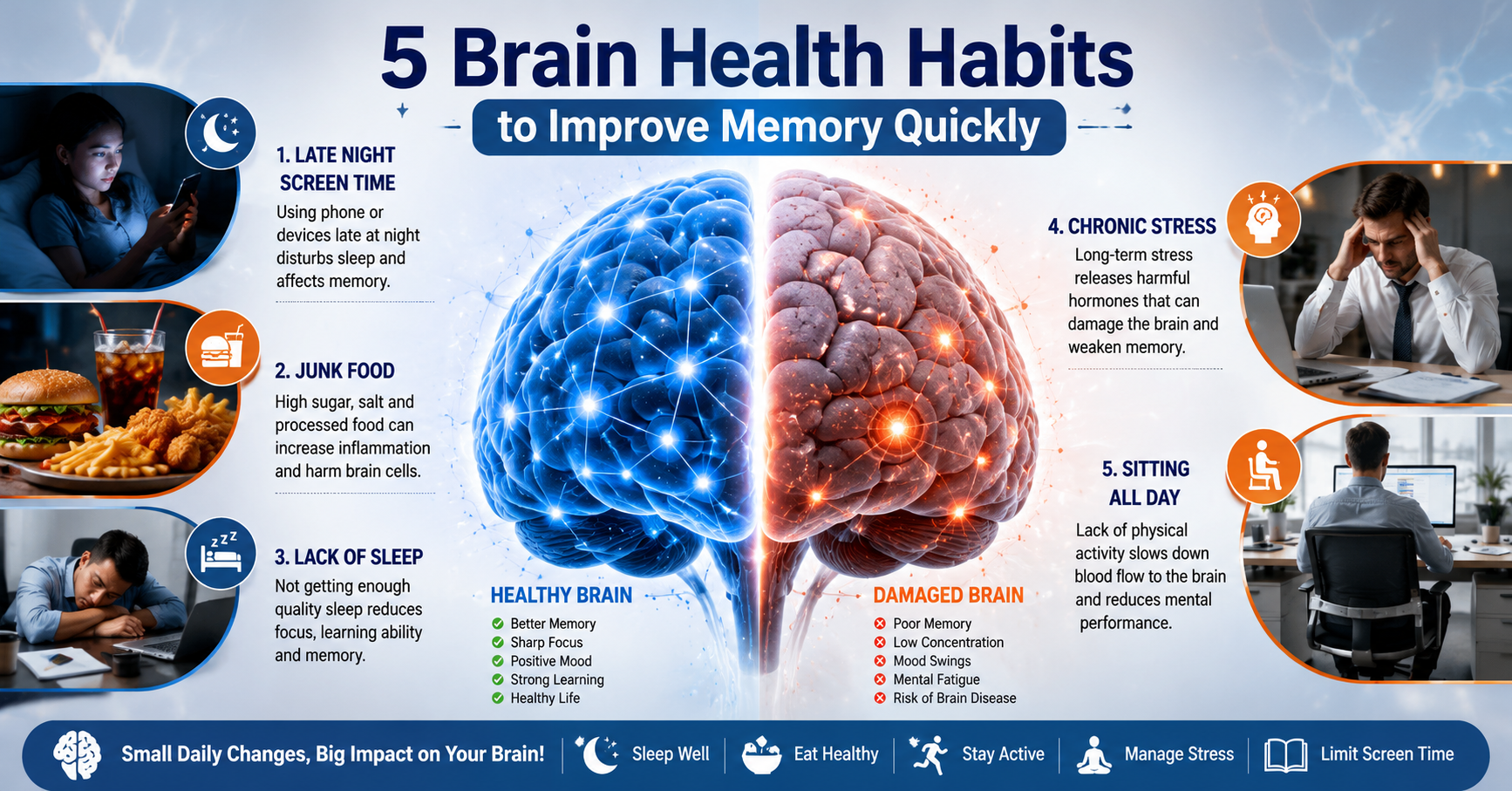
Have you ever misplaced your car keys, been unable to remember someone’s name, or had trouble concentrating on a critical task?
Why Brain Health Matters
The brain consists of around 86 billion nerve cells (neurons), which communicate via trillions of connections. Each time your heart beats, oxygen and other nutrients are supplied to the brain, which makes the neurons function efficiently.
Brain fitness affects:
• Recall
• Focus
• Ability to learn
• Decision-making
• Mood
• Creativity
• Problem solving
• Coordination
Maintaining good brain health is not only important in avoiding diseases in the future but also can improve your performance and overall well-being in the present.
Habit 1: Not Getting Enough Quality Sleep

How lack of sleep impacts the brain.
How to enhance sleep:
• Get 7-9 hours of sleep per night.
• Sleep and wake up at the same time each day.
• Avoid consuming caffeine late in the day.
• Avoid screen time prior to sleep.
• Know how to make a conducive sleeping environment.
Habit 2: Eating Too Much Processed Food

Foods to avoid
Food sources beneficial for the brain
Examples of great sources of brain-friendly nutrients:
• Fish high in fat content
• Green leafy vegetables
• Berries
• Walnuts
• Almonds
• Pumpkin seeds
• Eggs
• Whole grains
• Lentils
Drinking water is essential, as even slight dehydration has a negative impact on your mental state and performance.
Habit 3: Sitting All Day

Benefits of exercise to the brain
Recommended exercise
Try to engage in:
• 150 minutes of moderate-intensity exercise per week or
• 75 minutes of vigorous exercises.
Activities can include: Walking, riding bikes, yoga, gardening, dance, and swimming.
Habit 4: Living With Constant Stress

Symptoms include
Ways to manage stress positively include
• Breathing deeply
• Meditating or being mindful
• Going out into nature
• Exercising regularly
• Conversing with supportive family members or friends
• Keeping up with hobbies
Where there are overwhelming feelings of stress, it may be advisable to get assistance from a mental health expert.
Habit 5: Excessive Screen Time and Constant Multitasking

Healthy Digital Habits
• Make a schedule of not using screens.
• Do not use notifications.
• Discard phones during meals.
• Always read books.
• Avoid screens at least one hour before sleeping.
• Spending time on face-to-face interaction with family and friends.
Additional Habits That Help Protect Brain Health
Apart from avoiding bad habits, you might want to include the following brain-healthy activities into your life:
• Regular reading;
• Learning a new language or playing an instrument;
• Playing mind games;
• Hanging out with friends and family;
• Spending time in the nature;
• Never smoking;
• Drinking less alcohol;
• Keeping blood pressure, cholesterol levels, and blood sugar healthy.
All of them will help you to stay mentally active.
Warning Signs You Shouldn't Ignore
If you or anyone you know is suffering from:
• Persistent memory lapses affecting your day-to-day activities
• Trouble keeping up with conversations
• Repetition of similar queries
• Losing your way in familiar surroundings
• Sudden bouts of confusion
• Change in personality or behavior
• Problems carrying out everyday functions
Seek medical advice for evaluation to determine reversible factors like side effects of medicines, deficiency of vitamins, thyroid problems, depression, and sleep disturbances.
Small Changes Can Make a Big Difference
Brain health improvement does not need to happen instantly; rather, small but regular habits can make a big difference.
Begin by setting one or two goals:
• Get some sleep half an hour earlier each day.
• Consume water instead of sweet beverages.
• Take a walk for 20-30 minutes daily.
• Perform five minutes of mindfulness breathing exercises.
• Avoid excessive screen time before sleeping.
Final Thoughts
The brain works constantly from the moment you wake up to the time you go to bed. Taking care of it is one of the most valuable things you can do for yourself in the future.
It is possible to provide memory, focus, and healthy cognition in the long run by taking quality sleep, eating balanced food, being physically active, dealing with stress, and using technology consciously.
Note that forgetfulness may be a normal process, especially when you have stress and lack of proper sleep. But the constant problems with memory should be checked by a physician.
Frequently Asked Questions (FAQs)
1. What is the main lifestyle factor influencing brain health?
Quality sleep is one of the key lifestyle factors as it helps in memory consolidation and learning.
2. What are the foods to eat to improve your memory?
A diet that contains leafy vegetables, berries, nuts, seeds, whole grains, legumes, and oily fish will help promote your brain health and its ability to remember things.
3. Does exercising help in improving memory?
Regular exercises lead to an increase in the blood flow to the brain and result in improved cognition.
4. Does using screens a lot harm our memories?
The use of screens too often causes lack of attention and even insomnia, which negatively influences memory.
5. How many hours of sleep does an adult person need?
It is recommended that all adults should sleep 7-9 hours a day.
6. Is it normal to sometimes forget something?
Yes. Every single person has some lapses in his/her memory at times.
References
1. World Health Organization (WHO). Healthy ageing and brain health.
2. National Institute on Aging (NIH). Cognitive Health and Older Adults.
3. Centers for Disease Control and Prevention (CDC). Healthy Brain Initiative.
4. Harvard Medical School. Protecting Brain Health Through Lifestyle.
5. Alzheimer's Association. 10 Healthy Habits for Your Brain.